BMC wrote the evaluation criteria buyers were missing
A buyer’s guide comparing Control-M to named rivals, built in the structure AI assistants cite
The shortlist was set before sales arrived
In enterprise software the buyer does the research now. Orchestration is bought by groups, and each member forms a view before anyone talks to sales. By the time a workflow orchestration buyer spoke to a salesperson, the shortlist was usually already decided, and Control-M had no voice in any of it.
Search engines, AI assistants, competitor content and review-site signals were shaping the comparison criteria. The category was moving from job scheduling to workflow orchestration, and many buyers were still searching for the older, simpler tool for a problem that had become far more complex. Buyers at the consideration stage were calibrating what good enough looked like, and which platforms to shortlist. So the insight was straightforward. The team that controls the evaluation criteria controls the shortlist. The leap was to build a guide that does not sell.
The guide became the campaign
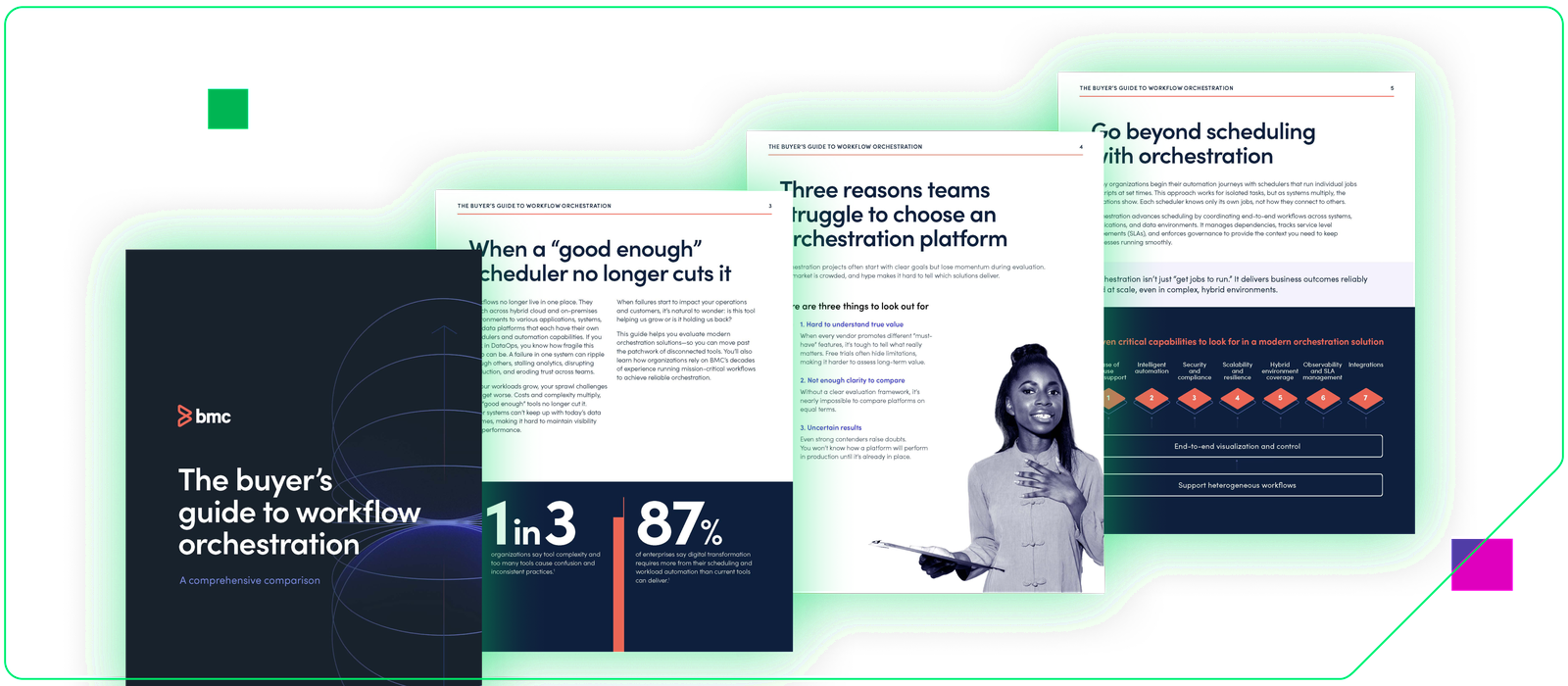
The buyer’s guide to workflow orchestration laid out seven critical capabilities, then compared Control-M, RunMyJobs and Stonebranch side by side, in the shape a buyer would build in a spreadsheet. One artifact powered the whole consideration journey, running through the landing page, paid search, content syndication, account-based media and review sites.
Designed to be cited
Buyers had started asking AI assistants how to evaluate orchestration platforms. Structured comparison and explicit criteria-and-trade-off framing are the shapes large language models and search engines cite, so the guide was engineered to be that source.
Three named account lists
The audience was a buying committee, named in advance. Roughly 14,000 growth and white-space accounts were evaluating orchestration for the first time, 3,900 installed-base accounts were deciding whether to extend or replace, and a further 2,700 surfaced through retargeting.
LinkedIn carried the guide itself
LinkedIn was where these people did their professional research, so it carried the asset itself. Document ads let a buyer read the comparison inside the feed, with no form in the way. Targeting ran by job level from manager through to CXO.
Proof and owned reach
Domino’s cites 3,000 data pipelines orchestrated and improved service level agreement performance. Air Europa cites a 54% increase in DataOps workflow efficiency. BMC’s own LinkedIn newsletter carried the guide to 52,000 sends and nearly 13,000 views.
Measured in accounts
Success was account progression in named target lists. In the installed base, the guide creative delivered nearly double the account click-through of a competitive-messaging variant running alongside it.
Related work
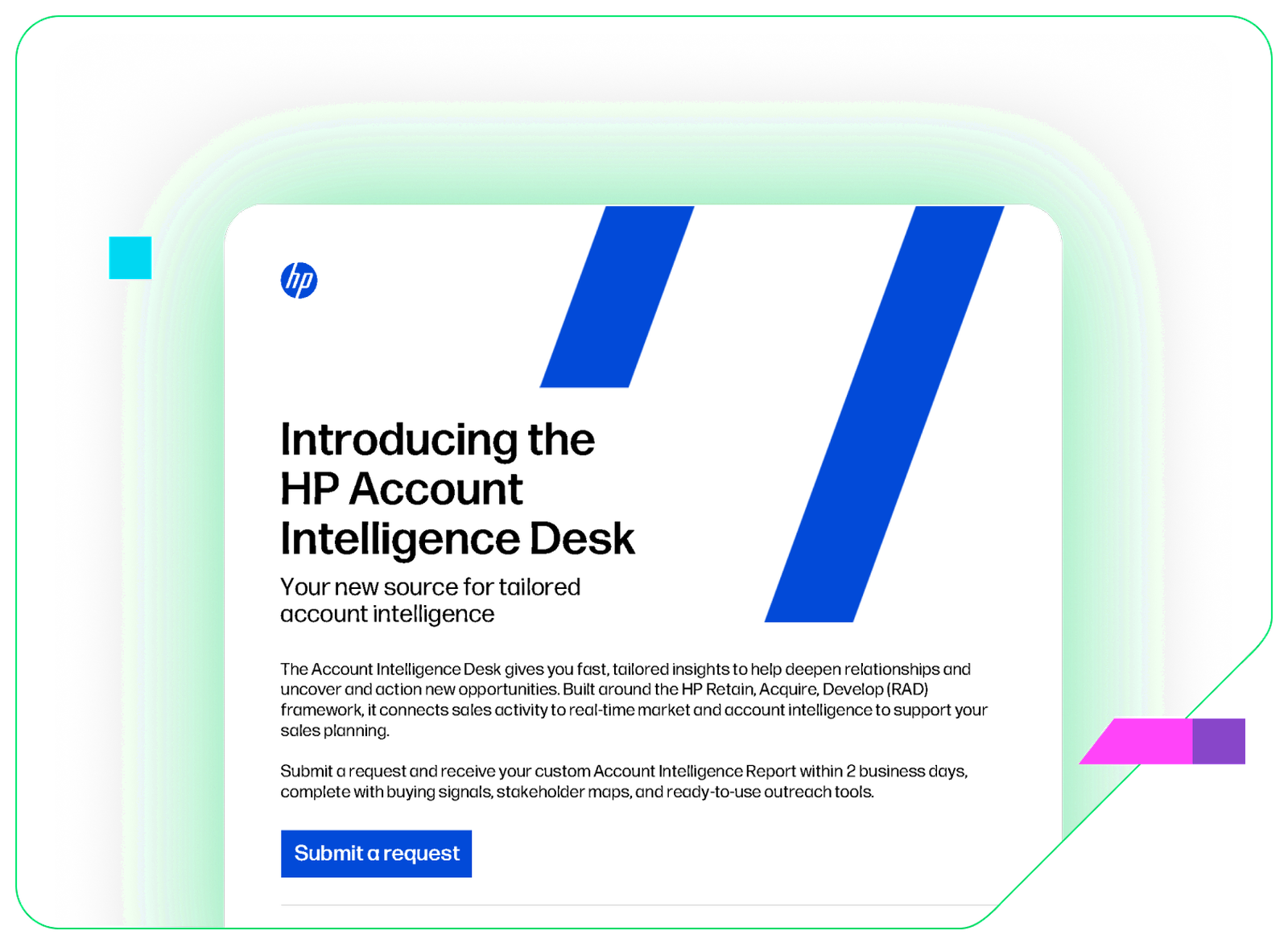
From signal to sale
An always-on AI desk that returns a ready-to-use engagement plan within 48 hours.
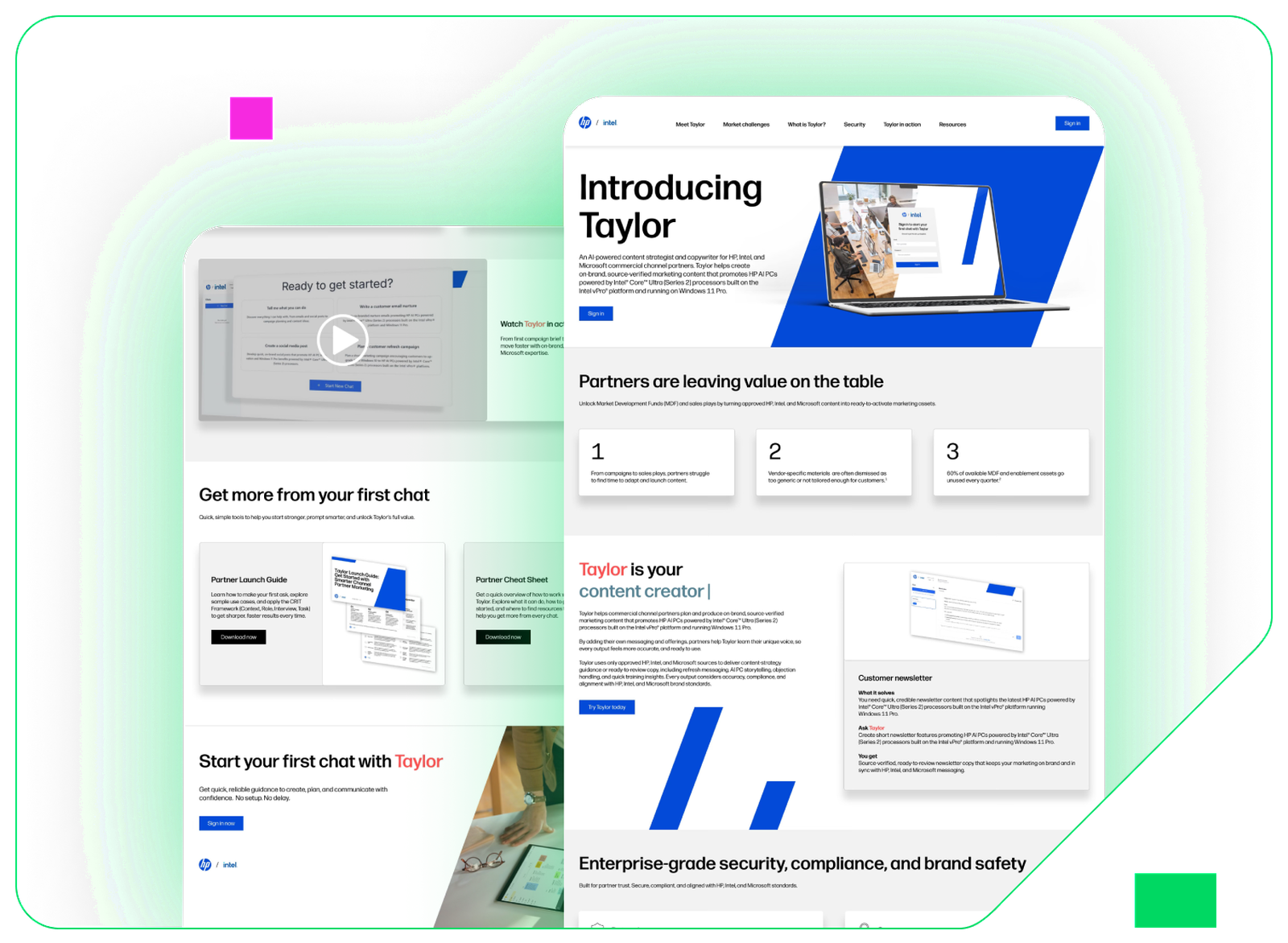
Confidence in every word
Taylor, an AI content strategist built around approved content, with every claim cited to its source.

AI in Practice
One connected experience across live events, skilling, guidance and peer proof.